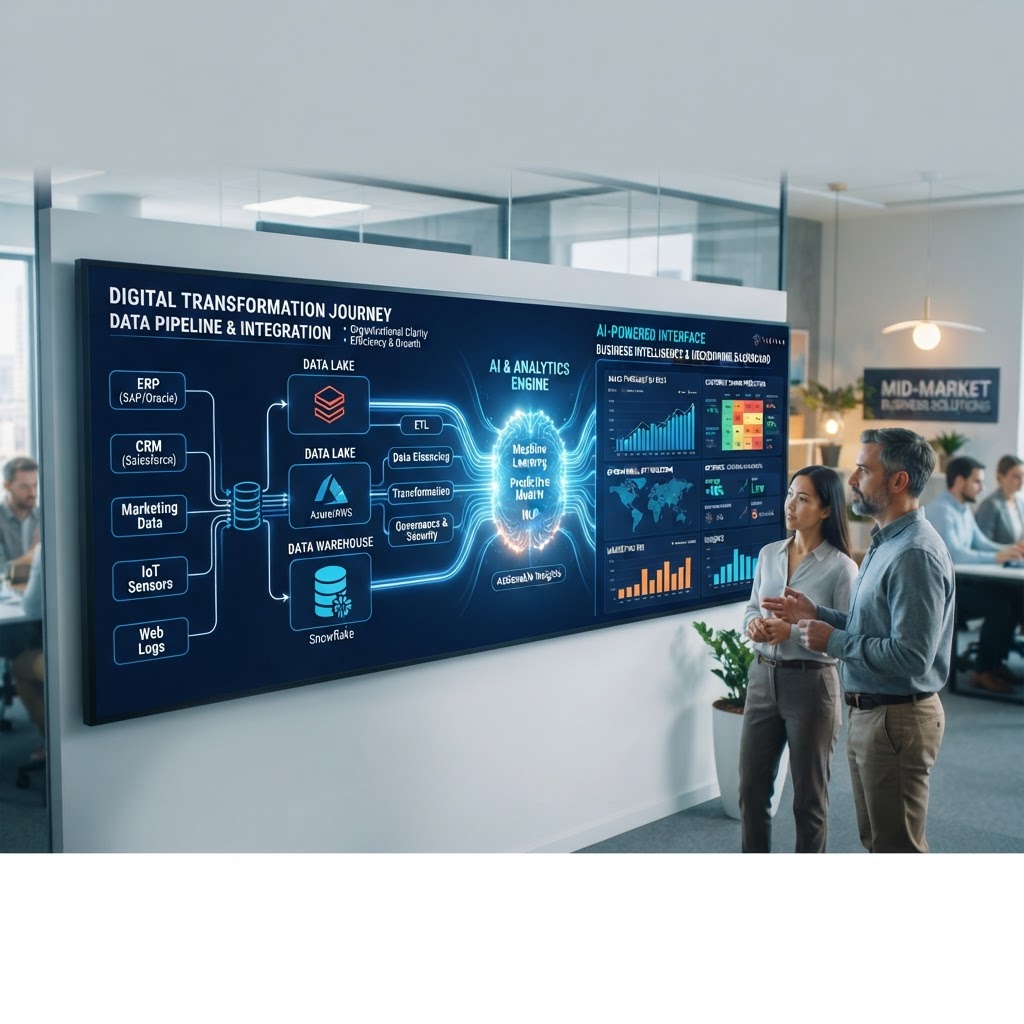
The Data Integrity Playbook: Preparing SMB Operations for AI-Enabled ERP Migration
For most mid-market CFOs and COOs, the decision to move from fragmented accounting software like QuickBooks or Xero to an all-in-one business operations software is driven by a need for better visibility. In 2026, that visibility is increasingly powered by agentic AI ERP systems. However, a common technical hurdle remains: the AI is only as intelligent as the data architecture it inherits.
While legacy systems rely on historical batch data, modern AI ERP for small business and midsize enterprises requires high-integrity, real-time data streams to fuel AI inventory forecasting and autonomous procurement agents. If your current operations rely on inconsistent spreadsheets and disconnected CRM records, a 'lift and shift' migration will likely result in 'garbage in, agentic failure out.'
The Critical Link Between Data Hygiene and Agentic ERP
In a standard ERP implementation, poor data quality leads to reporting errors. In an AI-enabled environment, the stakes are higher. Systems like NetSuite or Microsoft Dynamics 365 Business Central use embedded machine learning to suggest stock levels or flag anomalous transactions. If your legacy data contains duplicate SKUs, inconsistent vendor names, or inaccurate lead times, the AI’s predictive models will produce hallucinations rather than actionable insights.
As of late 2025, market data from Argano and NetSuite indicates that data migration issues remain a leading cause of project failure and timeline overruns. For ERP for midsize business, the migration phase is no longer just about moving rows and columns; it is about establishing a clean 'data substrate' for automation.
The Audit Phase: Transitioning from Outgrowing QuickBooks
When outgrowing QuickBooks, many organizations realize their data is functionally 'dark'—it exists in silos that the accounting software cannot see. To prepare for a cloud ERP vs legacy ERP transition, operations leaders must conduct a structured audit across three primary domains:
1. Transactional and Financial Integrity
Ensure that your chart of accounts is compatible with the multi-entity, multi-currency requirements of a global ERP. ERP vs accounting software distinctions become clear here; an ERP requires granular sub-ledger detail that QuickBooks often lacks. Check for unallocated payments and orphaned journal entries that could disrupt the 2026 fiscal close in a new system.
2. Inventory and SKU Standardization
Fragmented systems often have 'duplicate-but-different' entries for the same item. For AI inventory forecasting to work, every SKU must have a consistent history across procurement, sales, and returns. If your current inventory CRM accounting ERP stack uses different naming conventions in each silo, these must be normalized before the schema mapping begins.
3. Customer and Vendor Master Data
Agentic AI relies on clear relationships between entities. Auditing your master data involves removing duplicates and enriching records with standardized fields (e.g., tax IDs, lead times, and payment terms). This ensures that native features like intelligent AP/AR automation function correctly upon go-live.
Implementation Timelines and Phasing Strategies for 2026
The ERP implementation cost is often tied directly to the duration of the migration. Based on 2025-2026 industry benchmarks from Inecta and Ultra Consultants, organizations should expect the following timelines:
- Small Businesses (under $50M revenue): 3–6 months.
- Medium-Sized Organizations ($50M - $500M revenue): 4–12 months.
Leaders often face a choice between a 'Big Bang' rollout and a 'Phased' approach. While a phased rollout reduces immediate operational risk by allowing for iterative data validation, research from Lumenia Consulting suggests it typically extends total project duration and can increase costs by 15-20% due to the need for temporary integrations and duplicated efforts during the transition.
Evaluating the Tech Stack: NetSuite vs Odoo vs Business Central vs Sage Intacct
Choosing the right platform depends on how the AI is delivered. Most modern systems distinguish between native embedded AI and third-party integrations. As of early 2026, the market landscape reflects these nuances:
- NetSuite: Offers robust, native AI features for financial exception management and demand planning, though over-customization can complicate future upgrades.
- Microsoft Dynamics 365 Business Central: Deeply integrated with the Azure ecosystem, making it a strong choice for companies already using the Microsoft stack for data analysis.
- Sage Intacct: Known for its strong multi-entity financial consolidation and embedded AI for continuous accounting.
- Odoo: An open-source alternative that offers high flexibility but may require more internal technical resources to manage data governance effectively.
For companies prioritizing cost transparency, Acumatica remains unique with its resource-based pricing model. In 2026, Acumatica pricing typically ranges from $7,500 to $150,000 depending on computing resources consumed, rather than a per-user license fee, which can be advantageous for seasonal businesses.
Risks: The Cost of Dirty Data in AI Forecasts
A significant risk for SMBs is relying on historical batch data from fragmented systems. AI forecasting accuracy is highly dependent on real-time data streams. If your migration relies on 'dirty' historical data, your initial inventory predictions in the new ERP may be inaccurate for the first 2-3 months of operation. Furthermore, over-customizing a SaaS ERP to fit legacy (and often inefficient) data processes can lead to technical debt, making it difficult to utilize business profitability software features designed for standardized workflows.
The Data Governance Framework
Data integrity is not a one-time event; it is a permanent operational requirement. To ensure long-term business profitability software performance, COOs should implement a data governance policy that includes:
- Field Mapping Standards: Strict protocols for how new data is entered into the system.
- Automated Cleansing: Utilizing native ERP tools to periodically identify and merge duplicate records.
- Audit Trails: Monitoring changes to master data to prevent 'garbage in' from re-occurring post-migration.
Conclusion: Decision-Oriented Readiness
The transition to an agentic AI ERP is a strategic move that requires more than just a software purchase. It requires a fundamental cleanup of the operations that fuel the system. By treating data readiness as the primary hurdle—rather than the software choice itself—CFOs and COOs can significantly mitigate the risk of implementation failure.
If your organization is currently outgrowing QuickBooks and evaluating the cost-benefit of a 2026 migration, the first step is an honest audit of your existing data silos. Only then can you determine which platform—whether NetSuite, Acumatica, or Business Central—will deliver the forecasted ROI.
Ready to evaluate your technical readiness? Request an ERP fit assessment from Vanteliq to analyze your data architecture and implementation path.